
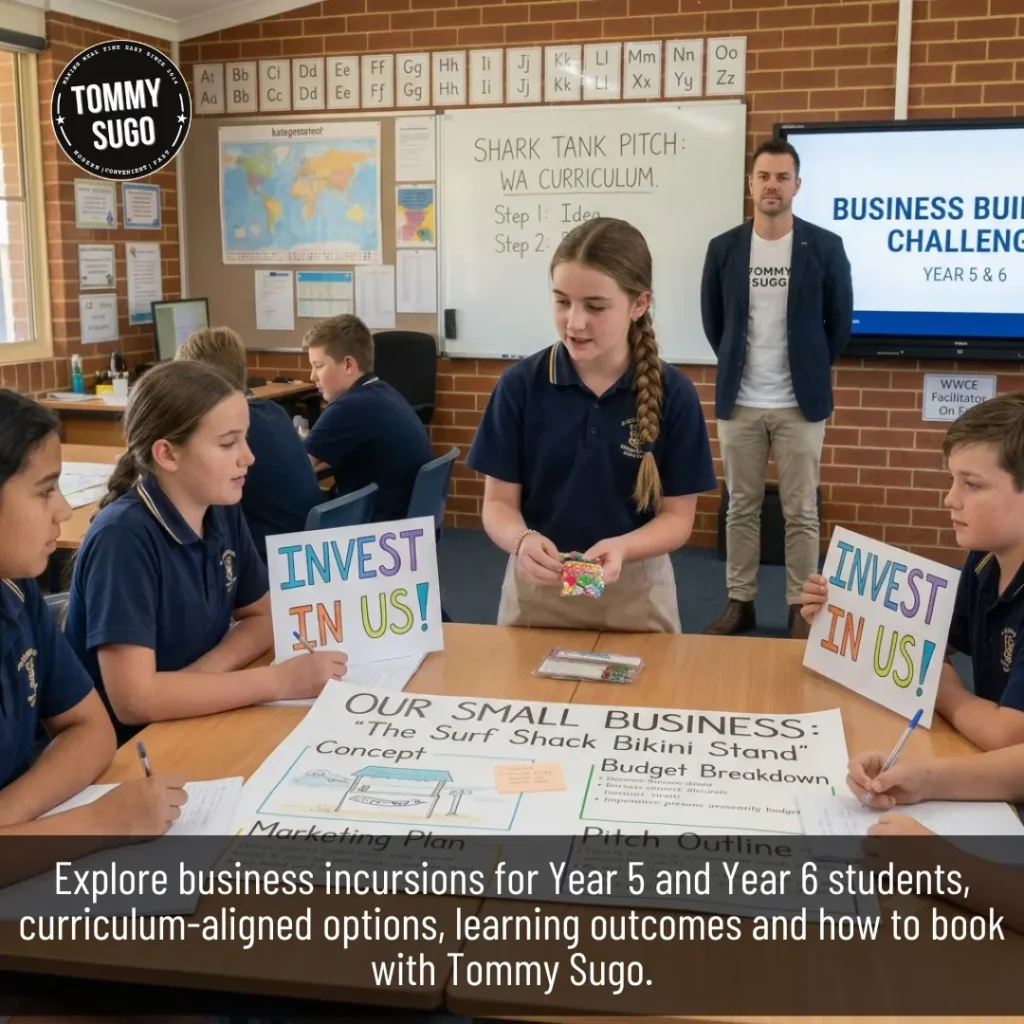
Searching for meaningful, curriculum-aligned experiences that build enterprise skills? Business incursions for Year 5 and Year 6 students offer practical, engaging learning that connects financial capability, teamwork and design thinking to real-world contexts. In this guide, we outline options, learning outcomes, logistics and booking steps so schools can select and implement incursions that meet classroom goals.
Quick Takeaways
- Business incursions for Year 5 and Year 6 students develop financial literacy, entrepreneurship and collaborative problem-solving.
- Choose incursions aligned to Australian Curriculum content descriptions in Civics & Citizenship, Economics & Business, and Design & Technologies.
- Plan logistics early: venue, timetable, student numbers, accessibility and equipment affect cost and delivery.
- Assess outcomes with simple rubrics and reflective activities to capture growth in skills and knowledge.
- Book through verified providers, request clear learning plans and confirm teacher support requirements.
Why Choose Business Incursions for Year 5 and Year 6 Students?
Relevance to Stage 3 learning objectives
Business incursions for Year 5 and Year 6 students directly address Stage 3 objectives in Economics & Business and Civics & Citizenship, including consumer decision-making, the role of enterprise and community participation. Incursions provide applied contexts for these outcomes.
Active learning that builds transferable skills
Students practise collaboration, problem-solving and communication. Business incursions for Year 5 and Year 6 students use hands-on tasks, market research, prototype development, and pitch presentations that transfer to broader academic and life skills.
Inclusivity and differentiation
Design options allow scaffolding for diverse learners. We select incursion models with differentiated roles and multiple entry points so all students can participate meaningfully.
Types of Business Incursions for Year 5 and Year 6 Students
Mini-enterprise programs
Mini-enterprise programs guide students through ideation, budgeting, production and selling. These incursions often culminate in a market day where students apply consumer skills and financial record-keeping.
Financial literacy workshops
Workshops focus on budgeting, saving, and basic economic concepts. Business incursions for Year 5 and Year 6 students use simulations and role plays to consolidate numeracy and decision-making.
Design and product development challenges
These incursions integrate Design & Technologies learning by asking students to prototype and test products, reflecting on user needs and sustainability.
Entrepreneurship and pitch sessions
Pitch sessions develop persuasive communication and planning. Students create simple business plans and present to peers or community judges, receiving structured feedback.
Industry visits and guest speaker incursions
Local business visits or guest speakers provide context about enterprise operations and career pathways. These incursions enrich curriculum content with authentic examples.
Curriculum Links and Learning Outcomes
Economics & Business connections
Business incursions for Year 5 and Year 6 students address concepts such as needs and wants, choices, scarcity and the role of money. Activities map to content descriptors and elaborations for practical assessment.
Civics & Citizenship integration
Many incursions incorporate community roles and civic participation. Students examine how businesses contribute to local communities and consider ethical responsibilities.
Design & Technologies alignment
Product-focused incursions provide opportunities to apply design processes: research, ideation, prototyping and evaluation, core Stage 3 outcomes.
Designing an Effective Incursion Program
Define clear learning objectives
Identify specific curriculum outcomes and skill targets before selecting a provider. Business incursions for Year 5 and Year 6 students should have measurable aims, such as demonstrating budgeting concepts or completing a market pitch.
Match format to class needs
Consider class size, timetable constraints and physical space. Choose between single-day workshops, multi-session programs or blended models combining in-class preparation with an external visit.
Plan assessment and reflection
Build simple rubrics and reflection prompts. Assess both content knowledge and soft skills, teamwork, communication and problem-solving using observable criteria.
Logistics and Practical Considerations
Budgeting and cost models
Providers may charge per student, per group or a flat rate. Factor in materials, transport and teacher release. Business incursions for Year 5 and Year 6 students often offer tiered packages to suit school budgets.
Scheduling and resourcing
Coordinate timetables early and ensure the availability of necessary equipment. Confirm room layout needs, AV requirements and any specialist materials in advance.
Health, safety and permissions
Obtain parental consent where required and review provider safety policies. Ensure incursion activities comply with school risk management procedures.
Selecting a Provider
Evaluate provider expertise
Check provider accreditation, educator background and experience delivering to Year 5 and Year 6 cohorts. Request sample lesson plans and references.
Require curriculum mapping
Ask for explicit mapping of incursion activities to Australian Curriculum content descriptions. Business incursions for Year 5 and Year 6 students should come with pre- and post-lesson resources for teachers.
Look for strong teacher support
Determine the level of teacher involvement required. The best providers supply clear teacher notes and adaptable resources to integrate the incursion into ongoing classroom work.
Preparing Students and Teachers
Pre-incursion activities
Introduce key vocabulary and concepts in class. Pre-incursion tasks might include simple market research, budgeting exercises or role assignment for group work.
Teacher briefing and participation
Hold a short briefing with the provider to clarify objectives and classroom management strategies. Teacher presence during incursions strengthens continuity and reinforces learning.
Post-incursion consolidation
Follow up with reflection tasks, reports or a class market analysis. Use student work to assess outcomes against initial objectives and plan next learning steps.
Assessment and Evidence of Learning
Practical assessment tools
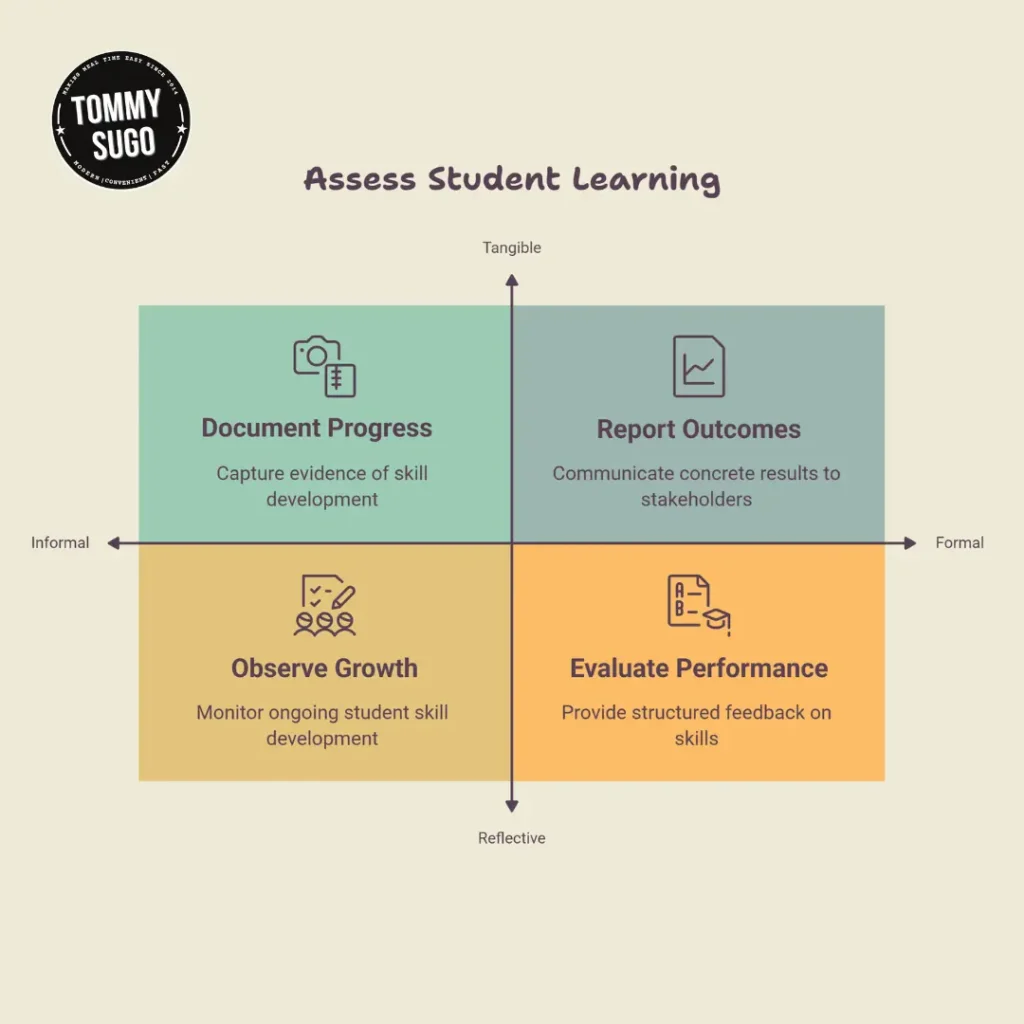
Use checklists, observation guides and student self-assessments to capture skill development. Business incursions for Year 5 and Year 6 students lend themselves to portfolio entries and multimedia documentation.
Rubrics for enterprise skills
Design rubrics covering teamwork, planning, financial accuracy and presentation. Keep criteria explicit and age-appropriate to provide actionable feedback.
Reporting to parents and leadership
Prepare concise reports and sample student work to communicate progress. Highlight tangible outcomes such as budgets produced, prototypes made and market results.
Inclusive Practice and Differentiation
Role allocation
Assign roles that match student strengths, researcher, designer, marketer, treasurer, to ensure meaningful participation. Business incursions for Year 5 and Year 6 students benefit from role rotation to build diverse skills.
Scaffolded materials
Provide templates, sentence starters and visual organisers for students who require additional support. Ensure extension tasks are available for advanced learners.
Accessibility considerations
Confirm physical access needs and adapt activities for students with learning differences. Providers should offer reasonable adjustments and alternative assessment methods.
Case Studies: What Successful Incursions Look Like
Primary school mini-market project
A school implemented a week-long market project where Year 5 and Year 6 students created simple products, set prices and managed sales. Students improved numeracy and collaborative skills and presented results to parents.
Financial capability workshop series
Over three sessions, students explored budgeting, needs vs wants and saving goals. Students produced personal budgets and participated in simulations that demonstrated the impact of choices.
Design challenge with local business partnership
Partnering with a local café, students developed packaging ideas focused on sustainability. The café implemented one student design, creating authentic community impact and a strong sense of purpose.
How to Book Business Incursions for Year 5 and Year 6 Students
Step 1: Define your goals and budget
Clarify learning objectives, preferred dates and available budget. Business incursions for Year 5 and Year 6 students should be selected to meet these predefined parameters.
Step 2: Request detailed proposals
Contact shortlisted providers and request proposals including curriculum mapping, session outlines, teacher support needs and cost breakdowns.
Step 3: Confirm logistics and contracts
Agree on dates, times, attendee numbers and cancellation policies. Ensure a written agreement covers all expectations and deliverables.
Step 4: Prepare your school community
Send information to staff and parents, collect permissions and run pre-incursion activities. Confirm equipment and room preparations with the provider.
Step 5: Run the incursion and evaluate
During delivery, collect observational data and student work. After the incursion, use rubrics and reflections to assess outcomes and feed results into reporting.
Cost-Saving Tips and Funding Options
Group bookings and term bundles
Many providers offer discounts for multiple sessions or whole-school bookings. Consolidating incursions can reduce per-student costs.
Apply for grants and community sponsorship
Seek local business sponsorship or education grants targeted at entrepreneurship, STEM or financial literacy programs to offset costs.
Leverage parent expertise
Invite parents with business experience to contribute as guest mentors or judges. This reduces external provider hours and increases community engagement.
Measuring Long-Term Impact
Follow-up projects and integration
Embed incursion outcomes into term projects and classroom routines to reinforce learning. Long-term integration solidifies skills beyond a single event.
Tracking skill progression
Maintain portfolios and track individual progress in enterprise skills across semesters. Continuous assessment reveals growth and areas needing further development.
Engaging community feedback
Collect feedback from parents, local partners and students to evaluate real-world impact and inform future incursion choices.
Provider Checklist: What to Ask Before You Book
Learning objectives and curriculum mapping
Request explicit alignment to Australian Curriculum content descriptions and year-level outcomes for Year 5 and Year 6.
Evidence of outcomes and references
Ask for case studies, references from other schools and examples of student work to validate the provider’s impact.
Clarify costs, inclusions and exclusions
Confirm whether materials, travel, catering and insurance are included. Establish cancellation and refund policies up front.
Practical Activity Examples You Can Run Next Week
Simple market simulation
Students create a product concept, set a price, and practise transactions using mock currency. Assess numeracy, communication and teamwork.
Budget challenge
Provide a fixed amount and a list of needs and wants. Students allocate funds and justify choices, reinforcing financial reasoning.
Rapid prototype and pitch
In small groups, students sketch a product, build a low-fidelity prototype and deliver a two-minute pitch. Use time limits to encourage concise planning.
Common Pitfalls and How to Avoid Them
Vague objectives
Problem: Incursions without clear learning goals result in limited impact. Solution: Define specific curriculum-linked objectives and success criteria before booking.
Poor logistical planning
Problem: Last-minute issues with space or equipment disrupt delivery. Solution: Confirm logistics with the provider four weeks in advance and run a checklist.
Insufficient teacher involvement
Problem: Providers deliver in isolation and gains are not reinforced. Solution: Ensure teacher briefing and embed follow-up lessons to consolidate learning.
Evaluating Success: Metrics to Use
Knowledge checks and quizzes
Short pre- and post-activity quizzes can quantify content knowledge gains. Use consistent measures to compare results.
Observation and rubric scores
Use standardised rubrics to evaluate collaborative skills, planning and presentation. Aggregate scores to demonstrate cohort improvements.
Student reflections and artefacts
Collect written reflections, photos and product samples as qualitative evidence of learning and engagement.
Conclusion
Business incursions for Year 5 and Year 6 students provide practical, curriculum-aligned opportunities to build financial literacy, entrepreneurship and collaborative problem-solving. By defining clear goals, choosing experienced providers and planning logistics carefully, schools can deliver high-impact experiences that leave lasting benefits for students. If you would like assistance selecting or booking a tailored incursion, visit Tommy Sugo to explore program options and start the booking process.
Frequently Asked Questions
What are business incursions for Year 5 and Year 6 students?
Business incursions for Year 5 and Year 6 students are external or school-delivered programs that teach enterprise, financial literacy and related skills through hands-on activities and real-world tasks. They aim to link curriculum content with practical experiences.
How long do typical incursions run?
Durations vary from single 60–120 minute workshops to multi-day or multi-session programs. Choose a format that fits your curriculum timing and desired depth of learning.
How much do incursions cost?
Costs depend on the provider, materials and duration. Prices may be charged per student, per class or as a flat program fee. Request detailed quotes and look for school discounts or bundled rates.
How do incursions align with the Australian Curriculum?
Reputable providers map activities to relevant content descriptions in Economics & Business, Civics & Citizenship and Design & Technologies for Year 5 and Year 6. Ask for explicit curriculum mapping when booking.
What resources do teachers need to provide?
Teachers may need to supply classroom space, basic equipment and student lists. Some providers supply all materials and resources; confirm inclusions in the booking agreement.
How can we assess student learning from an incursion?
Use pre- and post-quizzes, rubrics for enterprise skills and student reflections. Collect artefacts like budgets, prototypes and presentations as evidence for reporting.
Can incursions be adapted for diverse learners?
Yes. Effective incursions include differentiated tasks, role-based participation and scaffolded resources to ensure accessibility for students with varying needs.
When should schools book incursions?
Book at least 6–10 weeks in advance for popular providers and peak terms. Early booking secures preferred dates and allows time for planning and permissions.
Are there funding options for incursions?
Schools can explore local sponsorship, parent contributions, school budgets or education grants targeted at financial literacy and entrepreneurship programs to offset costs.
How do we choose the right provider?
Evaluate provider experience with Year 5 and Year 6 cohorts, request curriculum mapping and references, and confirm teacher support and risk management policies before finalising a booking.