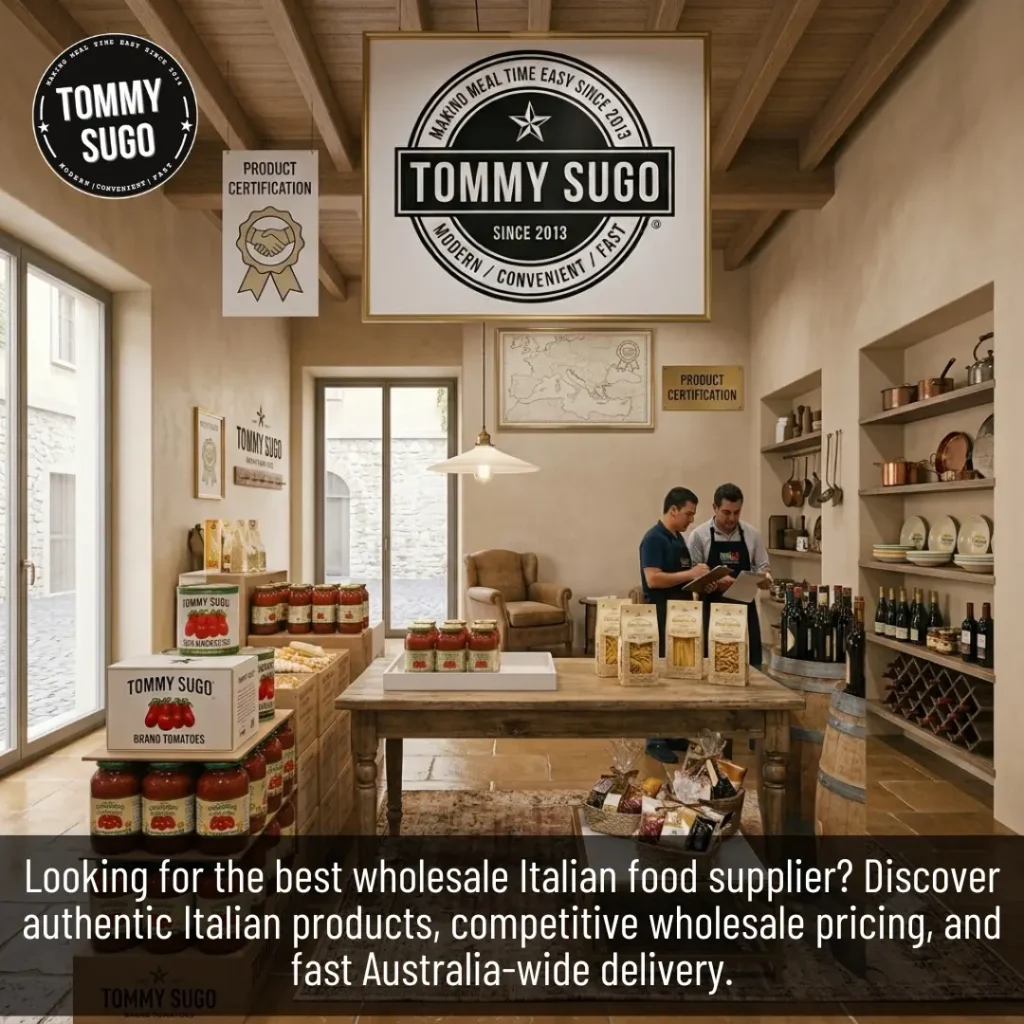
The best wholesale Italian food supplier delivers authentic made-in-Italy ingredients, competitive wholesale pricing, fast delivery across Australia and comprehensive product catalogues for retailers and foodservice. Tommy Sugo, a Perth-based family business, sources premium pasta, extra virgin olive oil, cheese and pantry staples to supply supermarkets, restaurants and specialty food outlets.
What makes a supplier the best wholesale Italian food supplier?
The best wholesale Italian food supplier balances authentic sourcing from Italy with consistent supply, clear certification, competitive pricing and responsive delivery across Australia. From a Perth perspective, assess product provenance, warehouse capacity and a supplier’s ability to serve both small retailers and large foodservice customers.
When evaluating suppliers, prioritise those with documented import relationships and product catalogues that include Italian products such as Gragnano pasta, PDO (DOP) cheeses, artisanal tomato passata and extra virgin olive oil. A genuine food distributor or importer will provide batch traceability, quality Italian certificates and the option to sample, ensuring the product matches the flavour and texture you expect for gourmet and supermarket channels.
How should you choose between a local food wholesaler and an importer/distributor?
Choose based on range and lead time: local wholesalers offer fast delivery and flexible MOQ, while importers/distributors provide exclusive imported Italian products and direct supply lines from Italy. For Perth and wider Australian operations, blend both to cover local and imported needs.
Local and imported sourcing each serve a purpose. A food wholesaler in Melbourne might stock high-volume pantry staples and domestic brands for immediate delivery, while an importer can bring in specialty items like artisanal biscotti, charcuterie and limited-run olive oil from family-owned mills. Tommy Sugo combines local warehousing with established Italian import channels to deliver both speed and authenticity to Australian retailers and foodservice clients.
What questions should retailers and foodservice buyers ask a wholesale Italian supplier?
Ask about provenance, minimum order quantity (MOQ), lead times, certification (DOP, HACCP, organic), storage and delivery capabilities, and sample policy. Also, to clarify pricing structure, mixing of local and imported lines, and support for promotions or exclusive brands.
Specifically request product catalogues and technical data sheets for pasta, tomato products, cheese and oils. Verify whether the supplier can supply Gragnano or regional pastas, DOP cheeses, and extra virgin olive oil with lab analyses. Confirm delivery areas, Perth, Melbourne and national distribution and whether the supplier handles cold-chain requirements for specialty cheese and charcuterie. Trustworthy suppliers will discuss shelf-life, packaging options and the ability to supply bulk sizes for foodservice or branded retail packaging for supermarkets.
How do price, MOQ and range affect your choice of wholesale Italian food distributors?
Price must reflect product authenticity and import costs; lower MOQ helps small retailers but can raise unit price; a wide range allows one-stop sourcing. Compare total landed cost, not just unit price, when evaluating wholesale Italian suppliers.
Calculate landed cost including import duty, freight, warehousing and distribution to your location. For Australian buyers, a bulk Italian food distributor in Australia that consolidates shipments can reduce per-unit import costs. Tommy Sugo offers tiered MOQs and combined shipments to lower costs for Perth retailers while maintaining access to premium and artisanal Italian products. Consider long-term contracts for exclusive lines to secure better pricing and consistent supply.
How important are certifications and traceability for Italian ingredients?
Certifications like DOP, IGP, organic, and HACCP are critical for verifying authenticity and quality Italian provenance. Traceability protects brand reputation and helps with recalls, audits and retailer requirements.
Request certificates of origin, test results for extra virgin olive oil and microbiological analyses for cheese and ready-to-eat products. Authentic Italian suppliers will provide documentation for made in Italy claims and, where applicable, DOP status for products like Parmigiano Reggiano or San Marzano tomatoes. For Australian distribution, ensure the supplier complies with biosecurity and import rules and can certify product handling from import to delivery.
What logistical and delivery details should you confirm with a supplier?
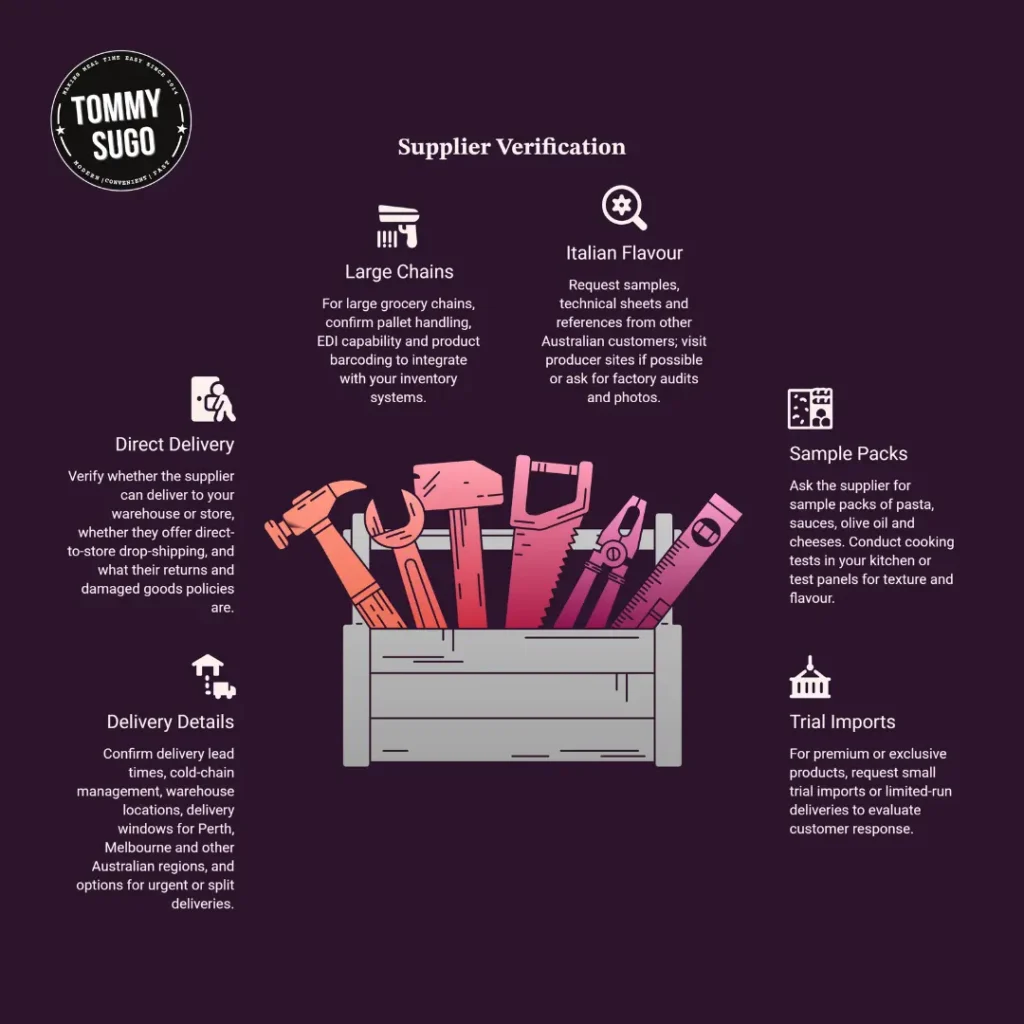
Confirm delivery lead times, cold-chain management, warehouse locations, delivery windows for Perth, Melbourne and other Australian regions, and options for urgent or split deliveries. Delivery reliability affects shelf availability and customer satisfaction.
Tommy Sugo operates a Perth warehouse with national distribution options and scheduled deliveries to metropolitan and regional supermarkets. Verify whether the supplier can deliver to your warehouse or store, whether they offer direct-to-store drop-shipping, and what their returns and damaged goods policies are. For large grocery chains, confirm pallet handling, EDI capability and product barcoding to integrate with your inventory systems.
How can you verify authentic Italian flavour and artisanal quality before committing?
Request samples, technical sheets and references from other Australian customers; visit producer sites if possible or ask for factory audits and photos. Sensory testing and small pilot orders reduce risk.
Ask the supplier for sample packs of pasta (including Gragnano styles), sauces, olive oil and cheeses. Conduct cooking tests in your kitchen or test panels for texture and flavour. Tommy Sugo provides product tasting packs for Perth customers and arranges chef trials for foodservice clients to validate versatility and consistency. For premium or exclusive products, request small trial imports or limited-run deliveries to evaluate customer response.
How does supplier type influence product range and exclusivity?
Importers and specialty food distributors tend to secure exclusive or small-batch Italian products; general food wholesalers focus on high-volume staples. Choose based on whether you need exclusive gourmet brands or broad pantry coverage.
Family-owned importers may work with artisanal producers in Italy to offer exclusive lines of pasta, biscuit and charcuterie. Food distributors with wide warehouses provide convenience for retailers seeking a single supplier for grocery, beverage and deli items. Tommy Sugo’s model blends exclusive imported lines with a wide range of locally stocked Italian ingredients to serve both niche gourmet retailers and larger supermarket demands.
Which questions should you ask when negotiating contracts with a wholesale Italian food supplier?
Negotiate price brackets, payment terms, minimum and maximum supply commitments, exclusivity, promotional support, liability insurance and termination clauses. Clarify responsibilities for import delays, damaged goods and currency fluctuations.
Include SLAs for delivery performance, product replacement, and quality compliance. Ask for initial test periods and review points at 3–6 months to adjust MOQ or pricing based on sales data. Ensure brand protection if you plan to develop private-label products made in Italy or to source exclusive artisanal items.
How has the market changed in 2026 for wholesale Italian food supply in Australia?
In 2026, buyers expect faster national delivery, stronger traceability and increased demand for artisanal and DOP-certified Italian products. Suppliers must balance local stocking with efficient imports and digital product catalogues.
Post-2024 logistics improvements and trade agreements have reduced lead times, but importers still face variability in freight costs and seasonal harvest yields. Buyers in Perth and Melbourne now prioritise suppliers who can certify authenticity and provide transparent supply chains. Tommy Sugo’s Perth operations have adapted by expanding warehouse capacity, offering digital product catalogues and strengthening relationships with family-owned producers in Italy to ensure a steady supply of high-quality Italian ingredients.
FAQ
What defines a wholesale Italian food supplier as “authentic”?
Authenticity is defined by documented provenance, producer relationships in Italy, DOP/IGP certifications where applicable, and lab analyses for products like extra virgin olive oil. Authentic suppliers share import documentation, photos of production methods and references from other retailers.
Can a Perth-based supplier deliver nationally?
Yes. Many Perth-based wholesalers, including Tommy Sugo, operate warehouses with national distribution options. Confirm pallet shipping, delivery windows and cold-chain services for refrigerated items.
How do I evaluate pasta quality from a wholesale Italian pasta supplier?
Request samples to test al dente texture, cooking yield and flavour. Check for provenance, such as Gragnano or bronze-die manufactured pasta and review technical sheets for durum wheat semolina content and drying methods.
What is a reasonable MOQ for specialty Italian ingredients?
MOQ varies: specialty artisanal lines often require higher MOQ due to import consolidation, while suppliers with local warehousing offer lower MOQs. Negotiate trial orders to minimise risk.
Should I prioritise price or provenance?
Balance both. For mainstream pantry lines, price matters for margin; for premium or gourmet categories, provenance and flavour justify higher prices. Use a mixed sourcing strategy to serve different customer segments.
How do import duties affect wholesale pricing?
Import duties, freight and warehousing add to the landed cost. Compare suppliers on total landed cost per unit and consider consolidated shipments to reduce import overheads for high-quality Italian products.
Can suppliers help with private-label Italian products?
Many importers and family-owned distributors assist with private-label projects, coordinating manufacturing in Italy, branding and packaging. Expect higher MOQs and lead times for private-label production runs.
How important is the cold chain for cheese and charcuterie?
Cold-chain is essential for perishable items to maintain quality and safety. Confirm refrigerated storage, temperature monitoring and controlled delivery for cheese, prosciutto and other deli products.
What delivery options should I expect in Melbourne vs Perth?
Melbourne has dense distribution networks and frequent deliveries; Perth often requires consolidated pallets and scheduled regional runs. Reliable suppliers account for these differences and offer clear delivery timetables.