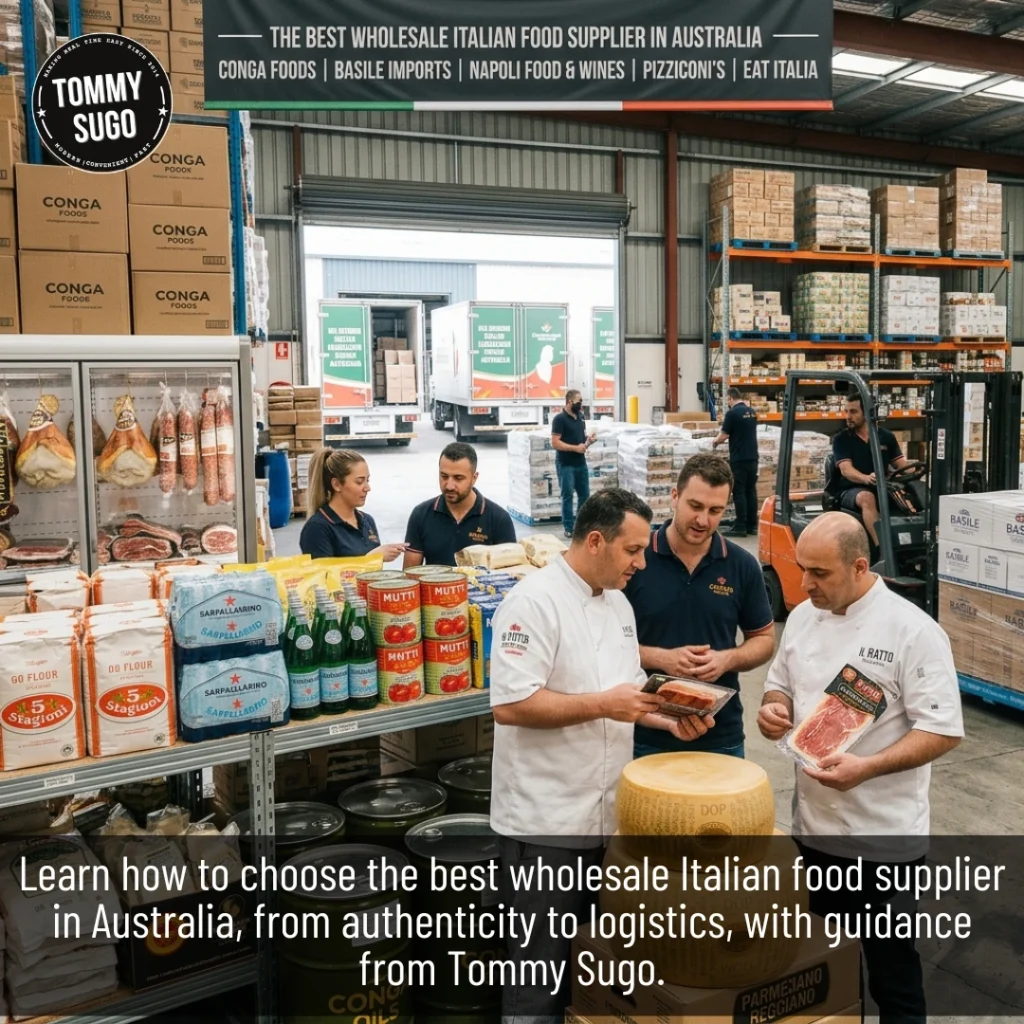
The best wholesale Italian food supplier for your business is the one that consistently delivers authentic Italian ingredients, reliable logistics, competitive pricing and strong customer support tailored to Australian foodservice and retail needs. For many Australian operators seeking authenticity, range and dependable supply, an established specialist supplier that sources from Italy and supports local distribution often represents the top option.
What a wholesale Italian food supplier is
Definition and role
A wholesale Italian food supplier is a company that imports, produces or distributes Italian-origin food products in bulk to restaurants, cafes, retailers and catering businesses. They act as intermediaries between manufacturers (often in Italy) and Australian buyers, providing product lines, storage, and delivery.
Core services offered
Typical services include bulk packaging, bespoke private labelling, food safety compliance, temperature-controlled distribution and menu-focused product consultation for chefs and procurement teams.
Why businesses use them
Businesses partner with a wholesale Italian food supplier to secure authentic ingredients, achieve price efficiencies, guarantee supply continuity and access product expertise that supports menu development and seasonal promotions.
Why choosing the right supplier matters
Impact on food quality
Ingredient provenance and handling affect taste, texture and presentation. A reputable supplier preserves product integrity through appropriate storage, handling and supply chain transparency.
Operational reliability
Consistent lead times, responsive logistics, and inventory management reduce menu disruptions and food wastage. This is essential in high-volume Australian markets such as Sydney, Melbourne and Brisbane.
Regulatory compliance and safety
Suppliers must meet Australian food safety standards (FSANZ) and maintain traceability for imported items. Choosing a compliant supplier reduces risk and simplifies audits.
Key criteria to evaluate wholesale Italian food suppliers
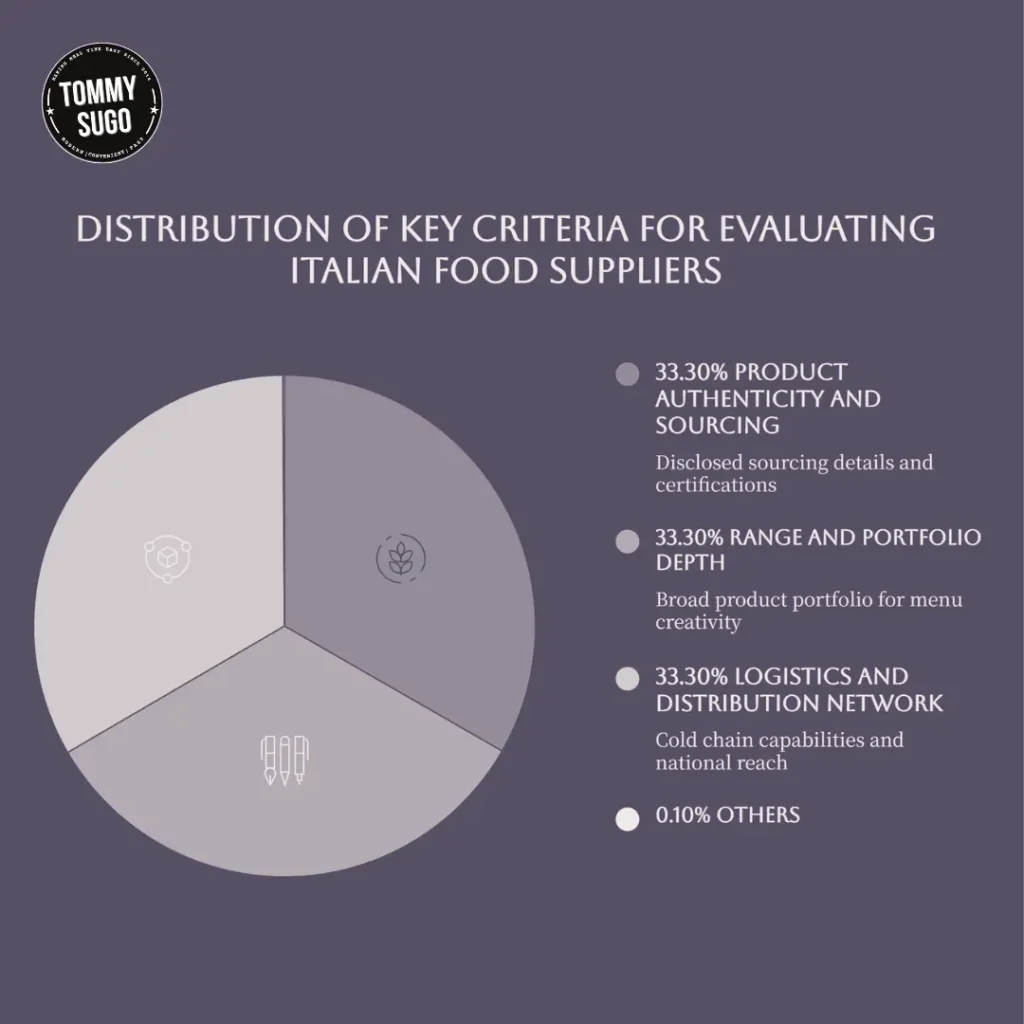
Product authenticity and sourcing
Look for suppliers that disclose sourcing details, provide certifications for PDO/PGI products and maintain relationships with recognised Italian producers.
Range and portfolio depth
A broad product portfolio of olive oils, cured meats, cheeses, preserved vegetables, pasta, sauces and bakery items enables menu creativity and single-source purchasing benefits.
Logistics and distribution network
Evaluate cold chain capabilities, delivery frequency, national reach and warehousing infrastructure to ensure timely supply across Australia.
Top product categories to expect
Olive oil and vinegars
Extra virgin olive oil with origin declarations and aged balsamic vinegars are staples. Quality grades and labelling matter for both kitchen use and retail resale.
Cured meats and antipasti
Prosciutto, salami and marinated vegetables require specialist handling and moisture control. Trusted suppliers offer sliced and whole formats to suit commercial needs.
Cheeses and dairy
Parmigiano-Reggiano, Pecorino and fresh mozzarella must be managed for cold chain continuity. Cheese aging and authenticity certificates are important for premium menus.
How to compare suppliers: a practical checklist
Pricing transparency
Compare unit costs, minimum order quantities and freight terms. Some suppliers offer tiered pricing for volume or long-term contracts.
Sample policies and tasting support
Request samples for sensory evaluation. A supplier that supports trial runs and chef tastings demonstrates confidence in product quality.
Customer service and technical support
Assess responsiveness, product training options and ability to support menu development or private label requests.
Regional and logistical considerations across Australia
Major metropolitan markets
Sydney, Melbourne and Brisbane have dense hospitality networks and benefit from same-day or next-day deliveries, while smaller centres typically require consolidated shipments.
Cold chain for remote locations
For businesses outside metropolitan areas, review refrigerated transport partners and transit time guarantees to avoid spoilage.
Import timing and seasonal availability
Seasonal produce and imported harvests affect availability. Confirm lead times for imported goods, especially during global peak periods (e.g., summer and holiday seasons).
Cost vs value: understanding pricing structures
Direct importers vs local distributors
Direct importers may offer lower product cost but require higher minimums; local distributors add handling and faster fulfilment at slightly higher prices.
Volume discounts and contract terms
Negotiate volume discounts and fixed-price windows to stabilise costs. Long-term contracts can secure supply and predictable pricing.
Hidden costs to watch
Account for freight, cold storage, customs duties, GST and waste management fees when calculating total landed cost.
Supply chain transparency and certifications
Food safety and traceability
Suppliers should provide HACCP documentation, FSANZ alignment and traceability records back to the production batch for imported cheeses and meats.
Quality marks and Italian origin labels
PDO (Protected Designation of Origin) and PGI (Protected Geographical Indication) labels provide verifiable quality claims for many Italian products.
Sustainability and ethical sourcing
Increasingly, Australian buyers prioritise suppliers with sustainable packaging, ethical labour practices and reduced carbon emissions in logistics.
Case study comparisons: three supplier archetypes
Specialist Italian importer
Strengths: deep category expertise, authentic supply lines and product provenance. Best for high-end restaurants and gourmet retailers requiring specialty items.
National foodservice distributor
Strengths: wide national coverage, integrated logistics and bulk pricing. Best for chains, hotels and large caterers seeking reliable delivery and volume discounts.
Local niche supplier
Strengths: personalised service, flexible small-batch offers and fast local delivery. Best for boutique cafes, delis and small restaurants.
Making the final selection: procurement steps
Step 1: Define requirements
List core SKUs, desired lead times, storage constraints and budget targets. Prioritise items with the greatest business impact.
Step 2: Request proposals and samples
Ask for detailed proposals including pricing breakdowns, delivery schedules and sample packs for sensory and shelf-life testing.
Step 3: Trial and performance benchmarking
Run a trial order and measure fill rates, product quality on delivery and customer feedback. Use these metrics to make a final decision.
Why do many Australian businesses choose specialist Italian suppliers
Authenticity of flavour
Direct relationships with Italian producers ensure authentic processing methods and ingredient profiles that match traditional Italian culinary expectations.
Menu differentiation
High-quality Italian ingredients enable distinctive menu offerings that can command premium pricing in competitive Australian markets.
Technical support for chefs
Specialist suppliers often provide chef-level support for recipe scaling, portioning and application guidance, which reduces product misuse and improves consistency.
Operational benefits of partnering with a top supplier
Reduced inventory waste
Reliable delivery schedules and accurate forecasting tools help minimise over-ordering and product spoilage.
Streamlined procurement
Consolidating Italian goods with a single wholesaler simplifies ordering, invoicing and supplier management.
Access to promotions and seasonal offers
Preferred customers often gain early access to limited-release products and promotional pricing for marketing windows.
How to verify supplier claims and quality
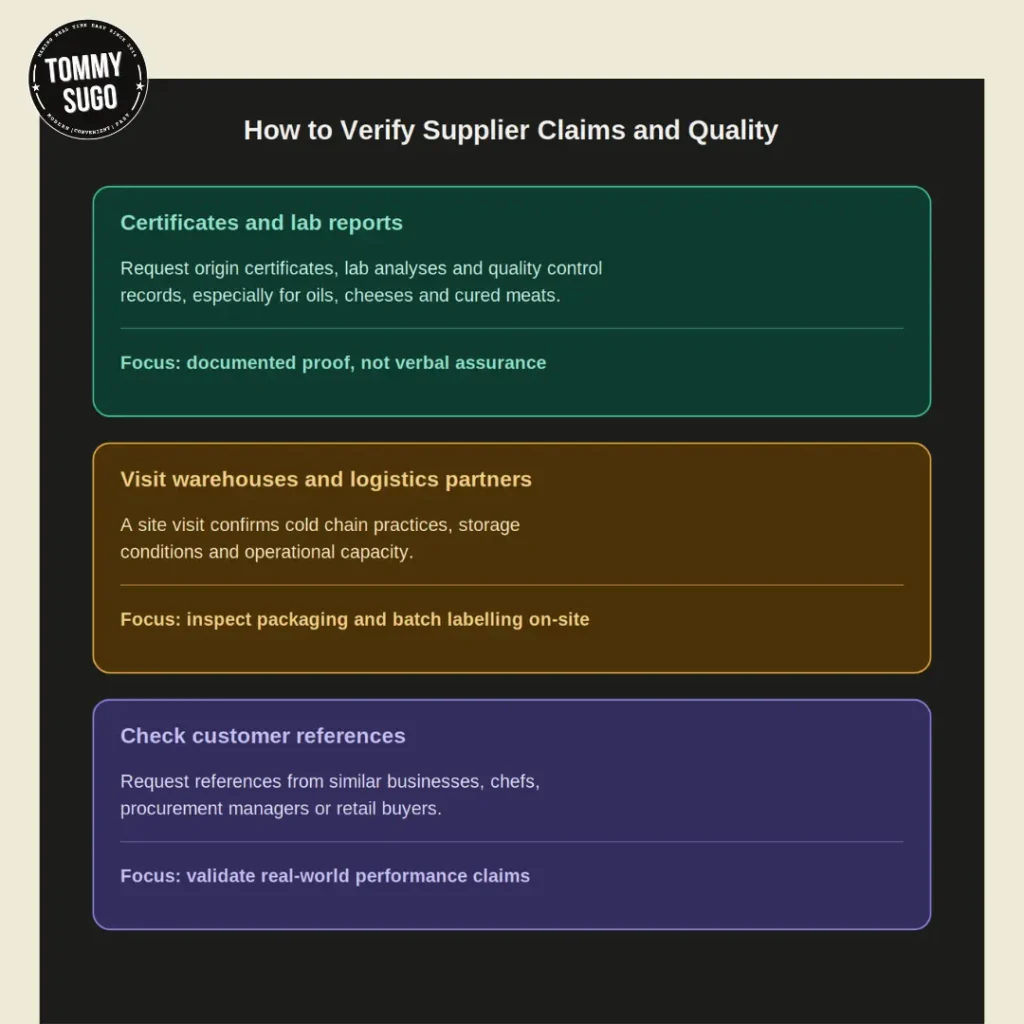
Ask for certificates and lab reports
Request copies of origin certificates, laboratory analyses and quality control records, especially for oils, cheeses and cured meats.
Visit warehouses and meet logistics partners
A site visit confirms cold chain practices, storage conditions and operational capacity. Where possible, inspect packaging and batch labelling.
Check customer references
Request references from similar businesses, chefs, procurement managers or retail buyers to validate performance claims.
Technology and ordering platforms
Online catalogues and e-procurement
Modern suppliers provide searchable product catalogues, order history and invoicing portals to streamline purchasing for Australian buyers.
Inventory integration and EDI
Integration with POS and inventory systems (via EDI or APIs) supports automated reordering and demand forecasting for multi-site operators.
Real-time delivery tracking
Track-and-trace improves planning and reduces the impact of delays. Confirm whether your supplier offers delivery notifications and proof-of-delivery records.
Pricing transparency: sample cost breakdown
Product cost
Base unit price from manufacturer or importer. This is influenced by quality, designation and packaging format.
Freight and handling
Costs for international freight, customs clearance, cold storage and domestic distribution. These are often itemised separately on invoices.
Taxes and duties
Include GST and any applicable import duties when calculating the landed cost for imported Italian products.
Key takeaways
- Choose a supplier that documents origin, certifications and traceability.
- Prioritise cold chain capacity and national distribution reach.
- Request samples and run a trial before committing to large contracts.
- Compare total landed cost, not just unit price.
- Seek suppliers offering chef support and menu development resources.
Comparative summary: choosing among supplier types
Best for premium authenticity
Specialist importers who source directly from Italy and manage selective product lines.
Best for national coverage
Large foodservice distributors with integrated logistics and frequent delivery windows across Australian cities.
Best for flexibility
Local niche suppliers who accommodate smaller orders, rapid changes and personalised service.
Conclusion
The best wholesale Italian food supplier in Australia is defined by how well they meet your needs for authenticity, supply reliability, regulatory compliance and commercial value. Conduct structured comparisons to evaluate sourcing transparency, logistics capabilities, product range and customer service and validate claims through samples and trials. For businesses seeking a reliable partner with authentic Italian product lines and Australia-focused distribution, a specialist supplier with national reach and strong chef support typically represents the optimal choice.
Visit Tommy Sugo to explore product ranges, request samples and discuss supply solutions tailored to Australian businesses.
Frequently Asked Questions
What should I expect from a wholesale Italian food supplier?
Expect bulk packaging, traceability, temperature-controlled logistics, product certification and commercial pricing structures. They should provide samples and support for menu and portioning decisions.
How do I verify the authenticity of Italian products?
Request PDO/PGI certificates, supplier origin declarations, and batch traceability. Independent lab reports and supplier audits also help validate authenticity.
What are typical minimum order quantities?
Minimums vary by supplier and product; direct importers often require pallet quantities, while local distributors may offer case-level ordering suitable for smaller businesses.
How do suppliers manage cold chain requirements?
They use refrigerated warehousing, temperature-monitored transport and validated handling procedures. Ask for temperature logs and handling protocols for perishable items.
Can suppliers provide private label services?
Many wholesale suppliers offer private-label packaging and co-packing services. Confirm minimum runs, labelling compliance and lead times for production.
How should I calculate total landed cost?
Include product price, international freight, customs clearance, import duties, domestic freight, cold storage and GST to determine the full landed cost per SKU.
What certifications should I request?
Request HACCP documentation, FSANZ alignment, PDO/PGI for origin products, and any third-party quality or sustainability certifications relevant to your market.
How can small operators access premium Italian products?
Work with suppliers offering smaller pack sizes, join cooperative purchases, or select local niche suppliers that cater to lower minimums and flexible ordering.
How often should I review supplier performance?
Review quarterly for fast-moving items and biannually for slower SKUs. Track on-time delivery, quality incidents and cost variance as key metrics.
What are common pitfalls in sourcing Italian food wholesale?
Common pitfalls include focusing on price alone, neglecting cold chain integrity, ignoring origin documentation and failing to trial products before committing to large orders.