
Introduction
If you are considering a barista course in Perth, this comprehensive guide will help you understand course formats, recognised certifications, practical skills taught, costs, and realistic career pathways in Western Australia. Whether you are an aspiring barista, hospitality professional, student, career changer, or cafe owner, this article provides practical, unbiased information to plan your coffee journey.
Key takeaways
- Course types: short skills courses, accredited training, apprenticeships and specialised latte art workshops.
- Core skills: espresso extraction, milk texturing, coffee sensory evaluation, equipment maintenance and customer service.
- Certifications: Statement of Attainment, SIT30816 Certificate III (Hospitality) units, and short course certificates.
- Costs and duration: from one-day workshops to multi-month traineeships, ranging from low-cost short courses to higher investment for accredited training.
- Career outcomes: cafe barista, shift supervisor, roastery assistant, trainer or cafe owner.
- Local trends: growing specialty coffee scene in Perth and regional WA, increasing demand for trained baristas and latte art skills.
Barista training options in Perth: types and formats
Short courses and workshops
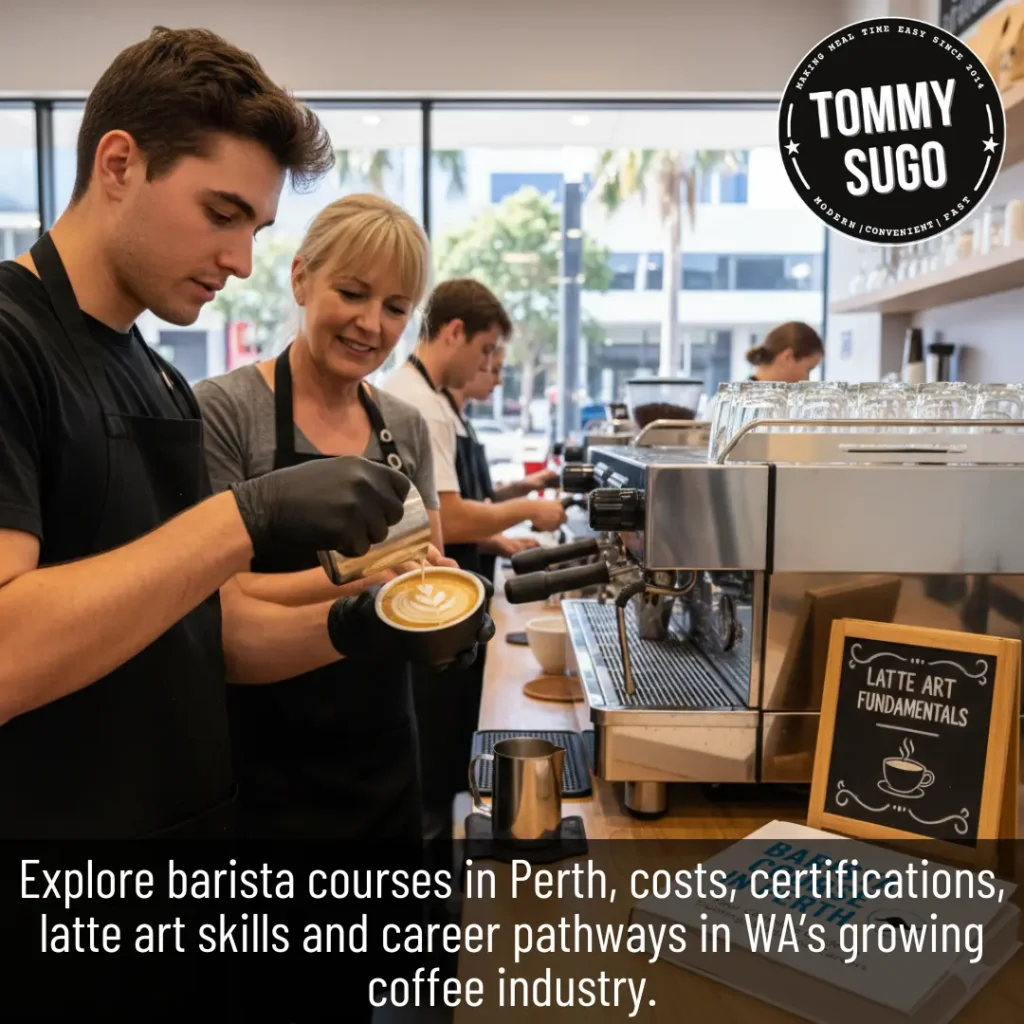
Short courses are ideal for beginners and those seeking fast upskilling. Many providers in Perth offer one-day or weekend workshops covering barista basics, espresso extraction, milk texturing and basic latte art. These sessions focus on hands-on practice and immediate workplace application.
Accredited vocational training
Accredited training sessions map to nationally recognised units within the SIT (Service Industries Training) framework. Units relevant to a barista course in Perth include SITXFSA005 (food safety), SITXFSA002 and SITXFSA003 (where applicable), and elective units in coffee service and espresso machine operation. Completing these units delivers a formal Statement of Attainment, which many employers value.
Traineeships and apprenticeships
Traineeships combine on-the-job learning with formal training. In Perth, hospitality traineeships commonly include coffee service training and can lead to Certificate II or Certificate III qualifications. Traineeships are an efficient path for those seeking paid workplace learning and a structured career pathway.
Perth barista course content: core skills taught
Espresso extraction and machine operation
A quality barista course in Perth emphasises extraction fundamentals: grind size, dose, yield, brew time and temperature. Students learn to operate commercial espresso machines safely, perform basic adjustments and troubleshoot common issues such as channelling or inconsistent shots.
Milk texturing and latte art techniques
Milk steaming and microfoam production are central skills. Courses teach pitcher technique, steam wand positioning and temperature control. More advanced classes progress into latte art basics like the heart, rosetta and tulip skills, highly valued in Perth’s specialty cafes.
Customer service and point-of-sale skills
Service skills are embedded in professional barista training. Trainees practice beverage presentation, order taking, up-selling, allergy awareness and the use of POS systems. Strong customer service enhances employability in Perth’s hospitality sector.
Barista course in Perth: accredited certificates and recognition
Statement of Attainment and unit recognition
Many short courses provide a Statement of Attainment for completed units. This accreditation is useful for job applications and can be combined with other units to build a full qualification. Verify that the provider lists the unit codes and maps to nationally recognised training packages.
Certificate III in Hospitality pathways
Completing a barista course in Perth can contribute toward the SIT30816 Certificate III in Hospitality. This pathway increases career mobility, with options to specialise in supervisory roles or expand into food and beverage management.
Industry recognition and employer expectations
Perth cafes often value practical experience alongside accredited training. Employers typically expect a barista to demonstrate consistent beverage quality, knowledge of coffee origins, and excellent customer service. Certification adds credibility, but practical skill and attitude are decisive.
Latte art and latte essentials: specialised skills for WA cafes
Foundations of latte art
Specialised latte art classes focus on consistency in milk texture, wrist movement, and timing. Perth venues that emphasise specialty coffee often seek baristas who can produce clean, repeatable designs. A barista course in Perth with a latte art component increases competitiveness for these roles.
Advanced pouring and design development
Advanced workshops cover multi-pour techniques, etching, and using alternative milks for different textures. Baristas learn to adapt designs to cup size and beverage type, which is valuable for those seeking barista competitions or head barista roles in WA.
Presentation and menu integration
Latte art is not only aesthetic. Courses teach how to integrate designs into menus, manage service times during peak trade, and train staff to maintain quality under pressure, which are important for busy Perth cafes.
Choosing the right barista school in Perth: what to look for
Trainer qualifications and industry experience
When selecting a barista school, check the credentials of the trainer. Experienced trainers who have worked in Perth cafes or roasteries provide practical workplace insights and current industry practices. A trainer who is also a registered assessor for vocational units is an advantage for accredited pathways.
Training equipment and class sizes
Quality training requires commercial espresso machines, grinders, and a variety of coffee beans. Smaller class sizes allow more hands-on practice and personalised feedback. Confirm the student-to-machine ratio and the availability of make-up practical sessions.
Work placement and industry links
Providers with strong industry connections can facilitate work placement or job leads. Partnerships with local cafes or roasteries in Perth and regional WA help bridge the gap between course completion and employment.
Costs and duration for a barista course in Perth
Short workshops and one-day courses
Costs for one-day or weekend barista courses in Perth typically range from AUD 100 to AUD 300, depending on the provider and included materials. These courses are cost-effective for basic skills and introductory latte art training.
Accredited training and longer programs
Accredited courses that deliver multiple units or contribute toward Certificate III tend to cost between AUD 600 and AUD 2,500, depending on scope, trainer experience and resources. Some providers offer payment plans or government-subsidised seats for eligible students in WA.
Traineeships, apprenticeships and on-the-job learning
Traineeships reduce upfront costs because trainees earn while they learn. Employers often cover training fees or access government incentives. Duration varies from several months to a year, depending on the qualification level and workplace hours.
Career pathways after a barista course in Perth: where to next
Entry-level barista and cafe roles
Graduates from a barista course in Perth commonly start as cafe baristas or casual staff. Early roles emphasise consistent drink quality, customer interaction and developing speed under pressure. These positions provide practical experience for progression.
Supervisory and management progression
With additional experience and training, baristas can become shift supervisors or floor managers. Completion of Certificate III in Hospitality or leadership units enhances prospects for management roles in Perth cafes and hospitality venues across WA.
Specialist roles: roastery, trainer and coffee entrepreneur
Experienced baristas can move into roastery roles (quality control, roasting and green bean selection), become in-house trainers, or start their own cafe business. A strong foundation from a barista course in Perth helps with business planning and product quality control.
Coffee industry trends in WA are affecting barista demand
Growth of specialty coffee in Perth
Perth’s specialty coffee scene continues to expand, with increased consumer interest in origin, roast profile and brewing methods. This trend raises demand for skilled baristas who can articulate coffee stories and maintain high beverage standards.
Alternative milks and dietary awareness
Consumer preferences for plant-based milks and dietary requirements have changed service expectations. Barista training in Perth increasingly includes handling alternative milks and allergen-safe practices.
Technology and sustainability in cafes
Modern cafes in WA adopt smart grinders, menu tablets and sustainable practices. Baristas trained in equipment maintenance, waste reduction and ethical sourcing are highly valued. Courses covering these topics align well with employer needs.
Enrolment process for a barista course in Perth: practical steps
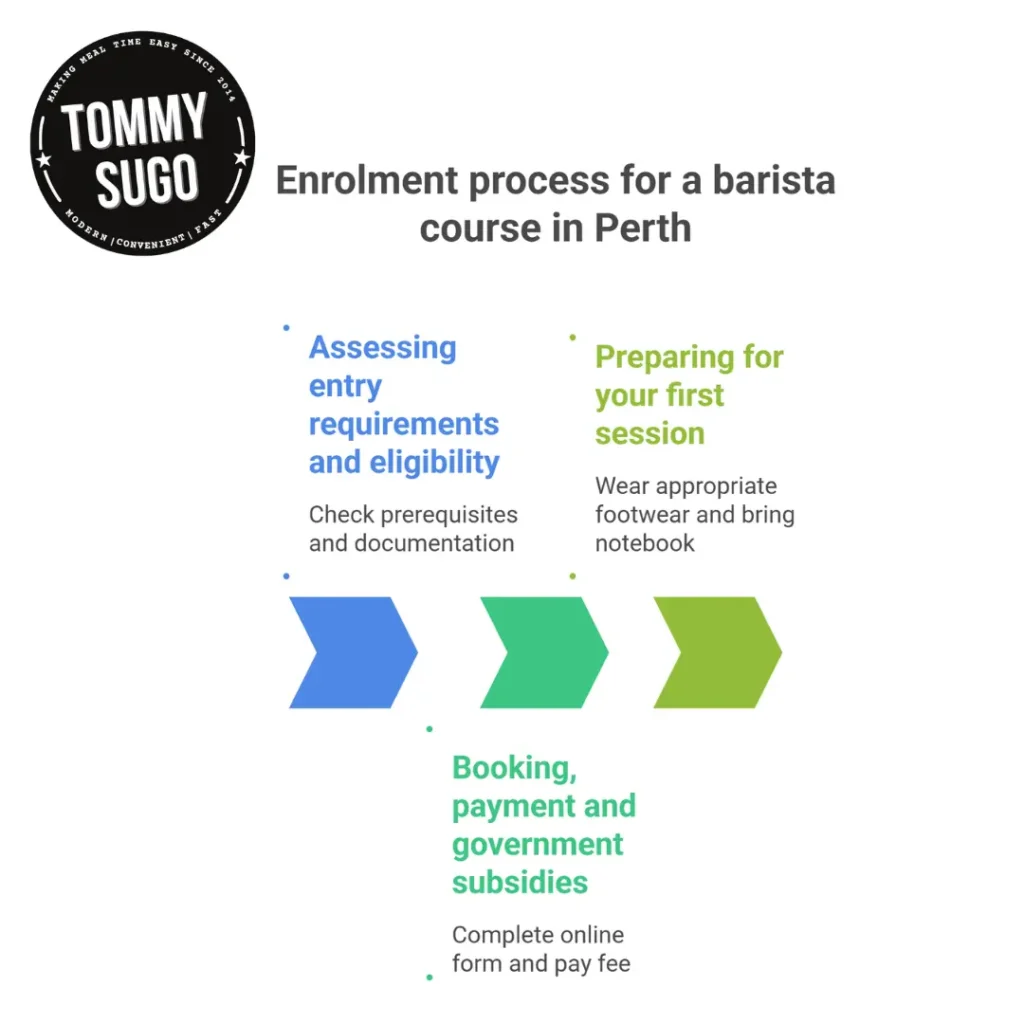
Assessing entry requirements and eligibility
Most short barista courses have minimal prerequisites, often a willingness to learn and basic literacy. Accredited courses may require proof of age, identification, and, occasionally, prior workplace experience. Check for any language, literacy or numeracy requirements for formal units.
Booking, payment and government subsidies
Enrolment typically involves completing an online form and paying a course fee or deposit. Some WA residents may be eligible for subsidised training or discounted fees under state programs. Confirm eligibility with the training provider.
Preparing for your first session
Prepare by wearing appropriate footwear, bringing a notebook and being ready for hands-on practice. Experienced providers will communicate timing, parking, and any COVID-19 or health protocols prior to course commencement.
Practical tips for getting the most from a barista course in Perth
Practice consistently and seek feedback
Skill development requires repetition. Practice extraction and milk texturing outside formal sessions if possible, and request constructive feedback from trainers or experienced colleagues to refine technique.
Build a coffee-focused network
Networking with classmates, trainers, and local roasters in Perth accelerates learning and uncovers job opportunities. Attend industry events, cuppings and local barista community meetups to deepen your coffee journey.
Record progress and plan continued learning
Maintain a log of technical parameters (grind, dose, yield, time) and tasting notes. Use this data to troubleshoot and improve. Plan further training in advanced latte art, sensory courses or roasting to expand career options in WA.
Choosing between barista basics and specialist courses in Perth
When to choose a barista basics course
If you are new to the industry or require a quick skills update, a barista basics course is suitable. These courses focus on foundational competencies needed for entry-level roles in Perth cafes.
When to choose advanced or specialised training
Select specialised courses if you aim for roles in specialty coffee, competition-level latte art, or roastery positions. These courses are more technical and often require prior experience or completion of basic units.
Combining short courses for broader competence
Combining a barista basics course with targeted workshops (sensory, latte art, machine maintenance) creates a balanced skill set. This modular approach is efficient for learners in Perth who want to pace their investment and learning.
Working in Perth cafes: employer expectations and interview preparation
Demonstrating practical competence
During interviews or trial shifts, employers expect clean technique, consistent shots and calm service. Demonstrate familiarity with common grinder and machine adjustments, and show that you can maintain quality during peak periods.
Customer service and cultural fit
Perth cafes place a high value on personality and team fit. Emphasise communication skills, reliability and an ability to work collaboratively. Positive customer interactions often matter as much as technical skill.
Building your resume and portfolio
Create a concise resume listing your barista course in Perth, relevant units, and practical experience. A portfolio of photos (latte art), cupping notes and references from trainers or employers can help you stand out.
Conclusion
A well-chosen barista course in Perth provides the technical foundation, recognised accreditation and practical experience needed to succeed in WA’s evolving coffee industry. From short workshops teaching barista basics to accredited units and traineeships leading to formal qualifications, there are learning pathways to suit different budgets, schedules and career goals. Prioritise hands-on training, qualified trainers, appropriate equipment and industry linkages to maximise return on your investment.
If you are ready to begin your barista course in Perth, research providers, compare course outlines and trainer credentials, and book a short workshop to gain immediate practical skills. Consider accredited training if you want a formal qualification and career progression. Reach out to local roasteries and cafes to explore work placement and networking opportunities. Taking the first practical step will accelerate your coffee journey in WA.
Frequently Asked Questions
What is covered in a typical barista course in Perth?
Typical coverage includes espresso extraction, grinder operation, milk steaming and texturing, basic latte art, machine maintenance/cleaning, hygiene practices, and customer service basics.
How long does a barista course usually take?
Short beginner/refresher courses run 3–8 hours (often one day); comprehensive or accredited programs last 5 hours to several days; longer traineeships or advanced pathways can extend to months.
Are barista courses in Perth nationally recognised?
Many accredited courses offer nationally recognised units (e.g., SITHFAB025 Prepare and serve espresso coffee), providing a Statement of Attainment; always check with the provider (RTO) for specific codes and recognition.
How much does a barista course in Perth cost?
Short workshops range from AUD 120–300 (e.g., 3–5 hours); accredited or full-day essentials courses cost AUD 150–450; more advanced or multi-day programs can reach AUD 600–900.
Do I need experience to join a barista basics course?
No, most beginner and basic courses are designed for complete novices with no prior experience required.
Will a barista course help me get a job in Perth?
Yes, it builds essential skills, confidence, and often certification that employers value; combined with hands-on café experience, it significantly boosts employability in Perth’s competitive coffee scene.
What qualifications are useful beyond a barista course?
Adding Certificate II/III in Hospitality, food safety units (e.g., SITXFSA005), or RSA enhances progression to supervisory, management, or broader hospitality roles.
Are there subsidies for barista training in WA?
Yes, some providers offer low-fee or subsidised training through Jobs and Skills WA programs (e.g., half-price or fee caps for eligible residents, youth, or concessions); check Jobs and Skills WA or RTOs for current eligibility.
Can I learn latte art during a barista course in Perth?
Yes, many courses include latte art modules from basic pours and heart/rosetta shapes to advanced multi-pour designs often as standalone sessions or add-ons.
How can I prepare for a barista course?
Wear closed-toe comfortable shoes, bring a notebook for notes, arrive ready for hands-on practice; if you have a home machine, experiment with basic brewing beforehand to get familiar.