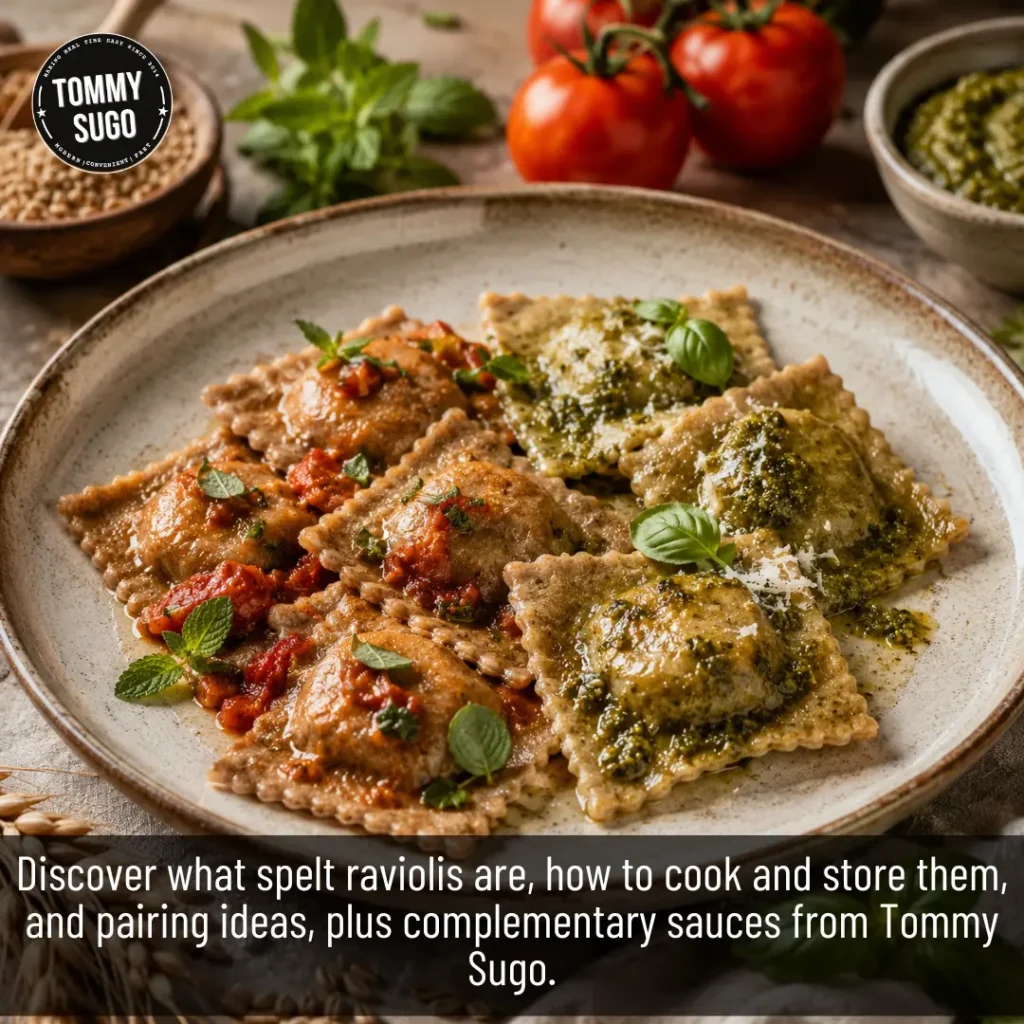
Spelt raviolis are filled pasta parcels made with spelt flour, offering a nutty flavour and improved digestibility compared with standard wheat.
Spelt raviolis are an accessible, nutritious alternative to traditional ravioli, ideal for home cooks and chefs in Australia looking for flavour, texture and a more digestible grain option. This article explains what spelt raviolis are, how to make them, how to cook and store them, and how to pair them with sauces and sides to suit Australian palates.
Why choose spelt raviolis?
Health advantages
Spelt is an ancient grain with a nutritional profile that often includes higher levels of protein, fibre and micronutrients than common wheat. Spelt raviolis can deliver these benefits in a familiar format that fits into varied diets.
Texture and flavour
Spelt imparts a gentle nutty taste and a slightly firmer bite, which complements rich fillings such as ricotta, pumpkin, mushroom or meat. Spelt raviolis hold shape well when boiled and pair naturally with robust sauces.
Digestibility and dietary considerations
Many people find spelt easier to digest than modern wheat, though it still contains gluten and is not suitable for coeliac disease. For those with mild sensitivities, spelt raviolis can be a preferable option.

Essential ingredients for spelt raviolis
Spelt flour choices
Use finely milled spelt flour for smooth pasta dough. Whole spelt flour adds more fibre and flavour but may require slightly more hydration. Both options produce excellent spelt raviolis.
Fillings that work best
Classic fillings include ricotta with herbs, roasted pumpkin, mushroom and thyme, and slow-cooked beef or lamb. Spelt raviolis complement both vegetarian and meat fillings.
Binding and seasoning
Eggs or egg replacers bind the dough; a touch of olive oil improves elasticity. Seasonings such as nutmeg in cheesy fillings or lemon zest in vegetable fillings lift the flavour of spelt raviolis.
How to make spelt ravioli at home
Step 1: Preparing the dough
Mix spelt flour with eggs, olive oil and a pinch of salt. Knead until smooth and elastic, then rest for 30 minutes. Resting relaxes the gluten and makes rolling easier, resulting in delicate spelt raviolis.
Step 2: Making the filling
Prepare filling ingredients: roast pumpkin, drain ricotta, or saute mushrooms. Combine with herbs, parmesan and seasoning. A firm but moist filling helps the spelt raviolis seal cleanly.
Step 3: Assembling and shaping
Roll dough thinly, spoon filling at regular intervals, fold and seal with a fork or pasta cutter. For uniform spelt raviolis, use a mould or cutter. Ensure edges are sealed to prevent leaking during cooking.
Cooking and serving spelt raviolis
Cooking techniques
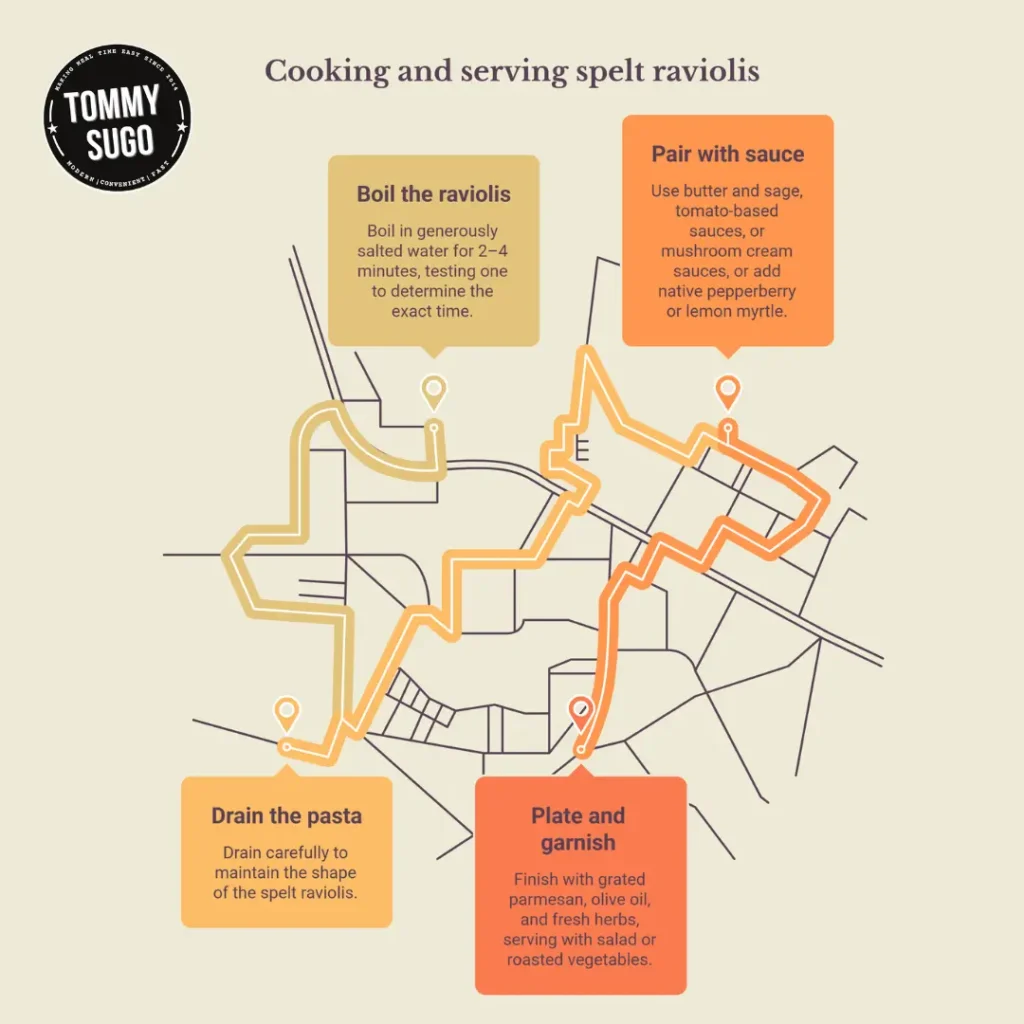
Boil in generously salted water for 2–4 minutes, depending on size. Fresh spelt raviolis cook quickly; test one to determine the exact time. Drain carefully to maintain shape.
Sauce pairings
Light butter and sage work well with pumpkin spelt raviolis; tomato-based sauces pair with meat fillings; mushroom cream sauces complement ricotta and spinach. Consider Australian ingredients like native pepperberry or lemon myrtle for a local twist.
Plating and garnishes
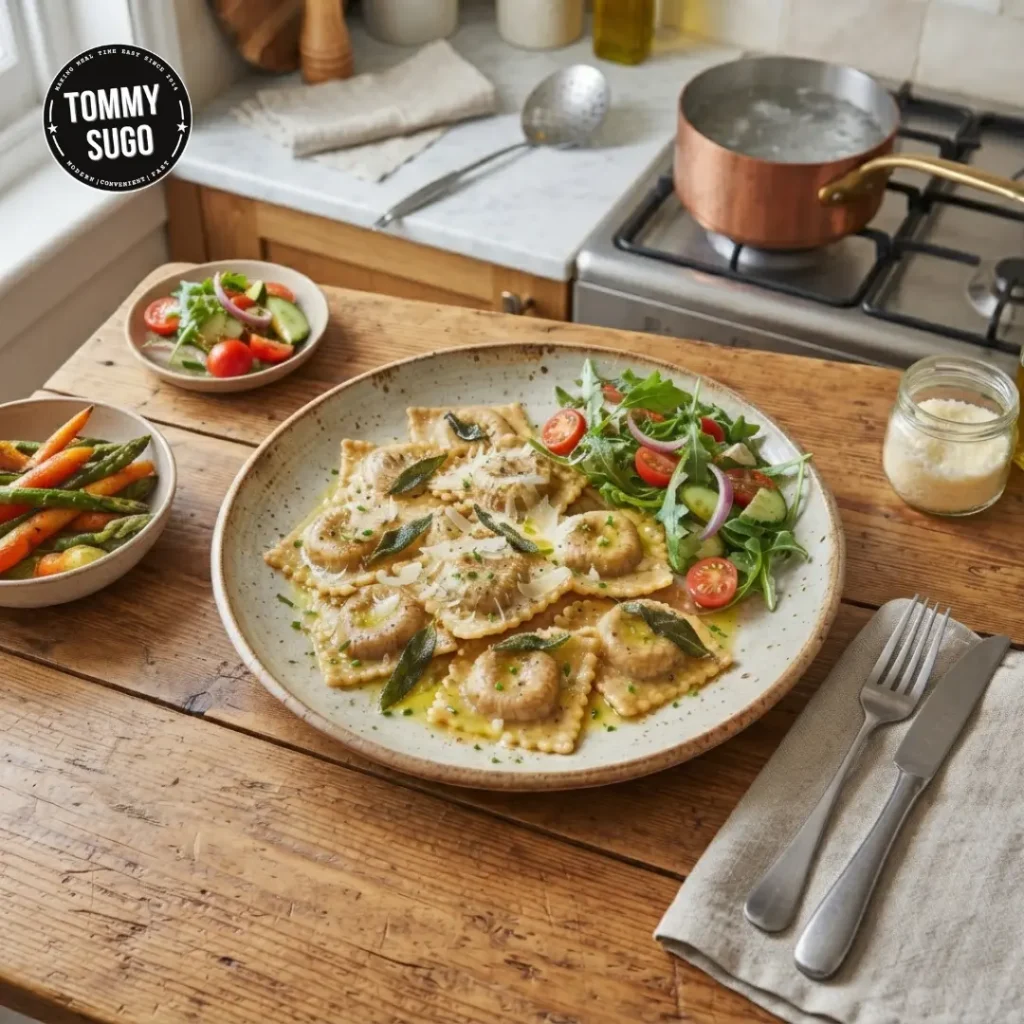
Finish with grated parmesan, a drizzle of quality olive oil and fresh herbs. Serve spelt raviolis with a crisp salad or roasted seasonal vegetables for balanced texture and flavour.
Commercial opportunities with spelt raviolis
Retail and wholesale considerations
Spelt raviolis are attractive to specialty grocers and farmers’ markets. Clear labelling of spelt content and allergen information is essential. Consider vacuum-sealing or fresh chilled packaging for shelf life optimisation.
Menu integration for cafés and restaurants
Adding spelt raviolis to a menu offers a point of difference and appeals to health-conscious diners. Offer filling variations and seasonal specials to drive repeat orders.
Collaborating with sauce brands
Pairing spelt raviolis with premium sauces enhances perceived value. For consistent results, recommend or supply sauces that complement the product. Tommy Sugo provides sauces that pair well with spelt raviolis.
Storing and preserving spelt raviolis
Short-term storage
Fresh spelt raviolis keep in the fridge for 2–3 days. Store on a floured tray covered with plastic wrap to prevent drying. For food safety, keep below 5°C.
Freezing tips
Freeze uncooked spelt raviolis on a tray until firm, then transfer to airtight bags. Frozen spelt raviolis cook directly from frozen; extend cooking time by a minute or two.
Labelling and shelf life
Label frozen or chilled units with date and filling type. Proper cold-chain management is important for the commercial distribution of spelt raviolis.
Nutrition and dietary profiles
Macronutrient overview
Spelt contains protein and carbohydrates with moderate fibre. The filling will influence calorie and fat content. Spelt raviolis made with lean proteins and vegetables can be a balanced meal.
Vitamins and minerals
Spelt provides B vitamins, iron and magnesium compared with refined wheat flour. When combined with nutrient-dense fillings like pumpkin or spinach, spelt ravioli becomes a vitamin-rich dish.
Allergen information
Spelt contains gluten. Clearly declare spelt raviolis as containing gluten and eggs if used. For customers with allergies, offer gluten-free alternatives and separate preparation areas.
Regional sourcing and sustainability
Australian spelt production
Spelt is grown in parts of Australia. Sourcing local spelt supports regional growers and reduces transport emissions. Look for certified suppliers to ensure quality for spelt raviolis.
Sustainable production practices
Emphasise low-waste production, recyclable packaging and seasonal fillings. Sustainable sourcing increases appeal for consumers choosing spelt raviolis.
Quality control and food safety
HACCP considerations
Implement HACCP plans for dough, fillings and packaging. Temperature control and sanitation are critical when producing spelt raviolis at scale.
Testing and shelf-life validation
Perform microbial testing, water activity and shelf-life trials. Records should document safe storage conditions for spelt raviolis to satisfy regulatory inspections.
Allergen management
Segregate areas for gluten-free production. Clear signage and staff training reduce the risk of cross-contact when preparing spelt raviolis.
Recipes: three signature spelt raviolis
Pumpkin and ricotta spelt raviolis
Ingredients: roasted pumpkin, ricotta, parmesan, nutmeg, salt and pepper. Method: combine, fill and cook. Serve with butter, sage and toasted pine nuts. This classic highlights the flavour of spelt ravioli.
Mushroom, thyme and mascarpone spelt raviolis
Ingredients: mixed mushrooms, shallot, garlic, thyme, and mascarpone. Method: sauté mushrooms, mix with cheese and fill. Serve with a light mushroom cream sauce for deep umami that complements spelt raviolis.
Slow-cooked beef ragu spelt raviolis
Ingredients: slow-cooked beef, tomato, red wine, and herbs. Method: shredraguu, fill raviolis and serve with reduced sauce and parmesan. Hearty and satisfying, this version shows that spelt ravioli can handle rich fillings.
Pairing spelt raviolis with Australian flavours
Native ingredients to try
Use lemon myrtle, wattleseed or pepperberry in fillings or garnishes. These flavours pair well with both savoury and sweet applications of spelt raviolis.
Wine and beverage matches
Light-bodied reds and crisp whites complement spelt raviolis. For a pumpkin filling, choose an aromatic white; for meat fillings, select a medium-bodied red from Australian regions like Barossa or Margaret River.
Side dishes and salads
Serve spelt raviolis with seasonal greens, roasted vegetables or a simple rocket and parmesan salad. Texture contrast improves enjoyment and presentation.
Marketing spelt raviolis online and in-store
Product listing tips
Use clear product names and highlight benefits: “Spelt Raviolis Pumpkin & Ricotta”. Include cook time, storage instructions and serving suggestions to reduce buyer hesitation and increase conversions.
Packaging and visual merchandising
Use transparent windows to show product quality. Include QR codes linking to recipes and sourcing information. An attractive presentation helps spellbind the raviolis and stand out on shelves.
Costing and pricing for producers
Calculating ingredient costs
Factor in the price of spelt flour, fillings and labour. Spelt can be more expensive than common wheat; reflect that in the final price for spelt raviolis while balancing perceived value.
Margin strategies
Offer premium flavours and value packs. Consider multipacks or pairing with sauces for higher average order values when selling spelt raviolis.
Promotional pricing
Run introductory offers or bundle deals with sauces and olive oils. Seasonal promotions tied to local produce highlight freshness and support spelt ravioli sales.
Distribution and logistics
Cold chain requirements
Maintain refrigeration from production to retail. Monitor temperatures and use validated carriers for shipping chilled spelt raviolis to ensure safety and quality.
Retail partnerships
Approach specialty grocers, delis and farmers markets. Offer sampling to demonstrate the flavour and texture advantages of spelt raviolis.
Online fulfilment and delivery
Package with insulated materials and ice packs for same-day or overnight delivery. Clear instructions on reheating and storage increase customer satisfaction with spelt raviolis.
Bullet takeaways
- Definition: Spelt raviolis are filled pasta made using spelt flour.
- Health: Spelt offers higher protein and fibre than many refined flours.
- Cooking: Fresh spelt raviolis cook fast, 2–4 minutes in boiling water.
- Storage: Refrigerate 2–3 days or freeze uncooked on trays.
- Market: Spelt raviolis appeal to specialty retailers and health-conscious diners.
Conclusion
Spelt raviolis combine the familiarity of filled pasta with the nutritional and flavour advantages of an ancient grain. Whether you are a home cook exploring new recipes or a small producer planning products for Australian markets, spelt raviolis offer versatility, appeal and commercial potential. For complementary sauces and retail partnership options, visit tommysugo.com.au to explore products that pair beautifully with spelt raviolis.
Frequently Asked Questions
What are spelt raviolis?
Spelt raviolis are stuffed pasta parcels made from spelt flour dough and a range of savoury fillings. They retain gluten and are not suitable for coeliac disease, but are often easier to digest.
How long do spelt raviolis take to cook?
Fresh spelt raviolis typically cook in 2–4 minutes in boiling salted water. Frozen spelt raviolis can be cooked from frozen with an extra 1–2 minutes of cooking time.
Are spelt raviolis gluten-free?
No. Spelt contains gluten. Spelt raviolis are suitable for people without gluten intolerance; they are not safe for people with coeliac disease.
Can I freeze spelt raviolis?
Yes. Freeze uncooked spelt raviolis on a tray until firm, then store in airtight bags. Cook directly from frozen for best results.
What fillings suit spelt raviolis?
Fillings such as pumpkin and ricotta, mushroom and mascarpone, or slow-cooked meatraguù work well. Spelt’s nutty flavour enhances both vegetarian and meat fillings.
How should I store homemade spelt raviolis?
Store fresh spelt raviolis in the fridge for up to 2–3 days on a floured tray covered with plastic. For longer storage, freeze uncooked on trays before bagging.
Do spelt raviolis taste different from wheat ravioli?
Yes. Spelt has a mild nutty taste and a slightly firmer texture, which can change the sensory profile of ravioli compared with conventional wheat pasta.
Are spelt raviolis healthy?
Spelt offers more protein and certain micronutrients compared with refined wheat. Spelt raviolis can be part of a healthy diet when filled with vegetables or lean proteins.
Can restaurants serve spelt ravioli as gluten-free?
No. Spelt contains gluten and should not be marketed as gluten-free. Restaurants should provide clear allergen information for spelt raviolis.
Where can I buy spelt ravioli in Australia?
Look for specialty grocers, artisan pasta makers and farmers’ markets for complementary sauces and retail-ready pairings. Visit tommysugo.com.au to explore options that suit spelt raviolis.